


A household budget can be very difficult to manage even if you’ve got a steady job and a regular income. Mortgage/rent, car loans, credit cards, medical bills, and the myriad of other day-to-day expenses can eat up so much of your income that there’s very little left to deal with any unforeseen costs or to meet other commitments.
For Florida residents in this situation, the widening gap between income and debt obligations is likely to be an early warning of financial difficulty. Spotting the problem before accounts are seriously past due may give you more time to consider your options, including whether bankruptcy might be a viable route to relief.
What Does a High Debt-to-Income Ratio Mean?
Your debt-to-income ratio compares your monthly debt payments with your gross monthly income, which is your income before taxes and other deductions. Lenders often use this figure when evaluating loan applications, but it can also help you understand how much of your income is already committed to debt.
To calculate your debt-to-income ratio, add your required monthly debt payments and divide that amount by your gross monthly income. Multiply the result by 100 to get a percentage.
For example, if you earn $5,000 per month before taxes and make $2,000 in monthly debt payments, your debt-to-income ratio is 40%.
A high ratio doesn’t necessarily mean you have to go bankrupt. It does, however, suggest that your debts are taking up a very large proportion of your income. You’re likely to be in a position where you can’t really save, can’t cope with an unexpected expense, and will be reliant on credit to pay for the basics.
Warning Signs Your Debt Is Becoming Unmanageable
A debt-to-income imbalance will often build up slowly. You may well be managing your payments just fine initially, only to find that a change in income or an unforeseen expense leaves you in a position where you can’t keep up.
Watch for signs such as:
- Using a credit card to pay for your groceries, your utilities, or any of your other normal day-to-day expenses
- Making the minimum payments without in any way reducing your balance
- Falling behind on one bill to make another payment
- Relying on overtime, bonuses or a bit of extra income here and there to meet your regular bills
- Having little or no money left after paying monthly bills
- Receiving collection notices or being constantly at the receiving end of creditor calls
These problems can get worse when your income drops as a result of reduced hours, illness, a job change, or retirement. A temporary disruption can make it very difficult to keep up with payments when so much of your income is already going toward debt.
How Bankruptcy May Help When Debt Exceeds Your Financial Capacity
If your debt payments have become impossible to maintain, bankruptcy may offer a way to address the underlying problem. The right approach depends on your income, assets, debts, and financial circumstances.
Chapter 7 can allow the discharge of eligible unsecured debts (so credit card balances and certain medical bills would be examples of that), which would in turn reduce the amount of your monthly income that is going towards debt service. There are, however, eligibility requirements for Chapter 7, and some debts are not dischargeable.
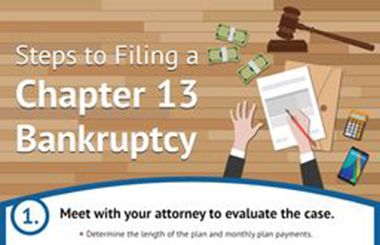
Chapter 13 bankruptcy works in a completely different way. It enables someone with a regular income to put forward a repayment plan which will last between 3 and 5 years. It may be possible to catch up on some of the overdue secured debts (e.g., mortgage, car payments) under the plan, and the other debts will be dealt with via the plan.
Neither option is right for every single person. Some people may be in a position where they can actually improve their financial position through negotiation with their creditors, through a reduction in their expenses, or through some other debt relief option. An attorney can look at the figures and tell you what the options might be.
Frequently Asked Questions
Does a high debt-to-income ratio mean I should file for bankruptcy?
Not necessarily. Your DTI is one way to measure how much of your income goes toward debt, but it doesn’t determine whether bankruptcy is appropriate. Your overall financial situation, including your assets, expenses, and types of debt, also matters.
Can bankruptcy lower my monthly debt payments?
It may. Chapter 7 can eliminate qualifying debts, while Chapter 13 provides a structured repayment plan that may make certain obligations more manageable. The potential relief depends on the debts involved and the bankruptcy chapter.
What if my income is too high for Chapter 7?
You might still have other options. Chapter 13 could be an option for you depending on your debts, your income, and your eligibility. An attorney would be able to go through the various bankruptcy options and explain which one would be appropriate in your circumstances.
Get Help Before Debt Becomes More Difficult to Manage
If your debt payments are taking up such a large proportion of your income that you’re left with nothing left over, simply waiting for the situation to improve on its own is going to make it worse. It’s a good idea to look at your finances at that stage to get a proper understanding of the extent of the problem and to start to consider what you might do about it before missed payments and collection efforts start to bite.
The Law Offices of Robert M. Geller can look at your financial situation, explain your options under Florida bankruptcy law, and help you decide whether you should file. Call the office to discuss your situation and find out what you can do next.