

The Law Offices of Robert M. Geller, P.A., helps Pinellas Park residents understand exactly what to expect at each stage of a bankruptcy case, from the paperwork before you file to what happens once your case concludes. If a garnishment notice, a creditor lawsuit, or several missed mortgage payments have brought you to this point, our attorneys can explain how bankruptcy works before you decide whether filing may fit your situation.
What Happens Before, During, and After Filing
Before Filing: Counseling and Preparation
Cases filed by Pinellas Park residents are generally handled through the Tampa Division of the U.S. Bankruptcy Court for the Middle District of Florida. Before filing, you generally must complete an approved credit-counseling course within the period federal law requires. During this stage, we prepare detailed financial schedules covering your income, debts, property, and recent transactions, along with supporting documents such as tax returns and pay records.
This preparation stage is also where the choice between types of bankruptcy becomes clearer. Chapter 7 may be appropriate if you’re seeking to discharge qualifying unsecured debt and meet the applicable eligibility requirements. Chapter 13 may be worth considering if you have regular income and can support a court-approved repayment plan over three to five years, often to address mortgage arrears or vehicle debt while continuing to meet the obligations required to retain the property.
Immediately After Filing: What Changes
Once your petition is filed, an automatic stay generally takes effect. It pauses many collection efforts, including calls, garnishments, lawsuits, and, in many cases, foreclosure or repossession proceedings while your case is pending. Certain actions can fall outside the stay, and creditors can, in some situations, ask the court for permission to proceed despite it. A trustee is also appointed to review and administer your case.
About a Month Later: The Meeting of Creditors
Most cases include a meeting of creditors, often called a 341 meeting, roughly a month after filing. It’s a short administrative session rather than a courtroom hearing, during which the trustee asks questions and reviews the information in your filing. One of our attorneys attends this meeting with you.
When the Case Concludes
From here, timing depends on the chapter filed. Straightforward Chapter 7 cases often reach discharge within about four months. Chapter 13 cases generally remain open for three to five years while you complete the confirmed repayment plan and continue meeting the obligations tied to secured property.
The stage you’re in affects more than just timing. It can influence which records you’ll need, whether immediate filing protection matters for your situation, and whether Chapter 7 or Chapter 13 deserves closer consideration. We walk through these details with Pinellas Park clients before recommending a filing strategy.
Bankruptcy Filing Requirements in Pinellas Park
A bankruptcy filing requires complete and accurate disclosure of your income, debts, assets, and recent financial transactions, not simply a request to stop creditor contact. Your debts are grouped by category, which affects how filing treats them: secured debts tied to collateral, such as a mortgage or car loan; unsecured debts, such as most credit cards and medical bills; and priority debts, such as certain tax obligations, which receive different treatment regardless of chapter.
Available Florida exemptions may protect qualifying interests in a homestead, vehicle, retirement account, or other property, depending on your residency history, asset value, and the requirements applicable to each exemption. Incomplete filings or missing documentation can delay your case or require additional submissions before it moves forward.
Bankruptcy Eligibility for Pinellas Park Residents
Chapter 7 eligibility is often determined through a means test that compares your household income with the applicable Florida median for a household your size. Income below the applicable median may simplify the means-test analysis, although other eligibility and filing requirements still apply. Income above the median does not automatically prevent Chapter 7 eligibility, since your allowable expenses and disposable income may be evaluated further.
Chapter 13 generally requires regular income sufficient to support a feasible repayment plan, along with compliance with federal debt limits and the requirement that your case be filed in good faith.
How Bankruptcy Debt Relief Works in Pinellas Park
Bankruptcy debt relief doesn’t treat every debt the same way. Qualifying unsecured debts, such as credit card balances and medical bills, are among the debts most commonly discharged. Secured debt works differently, since Chapter 13 may provide a structured way to address mortgage arrears or vehicle debt while you continue making the payments required under the plan. Certain tax obligations may be addressed depending on their age and type, while student loans are generally not discharged through the ordinary bankruptcy process.
Liens tied to secured property are a separate consideration from the underlying debt itself, and they often require their own review even after a case concludes. We assess what relief is realistically available for your specific debts before you file.
How Our Attorneys Help Pinellas Park Residents
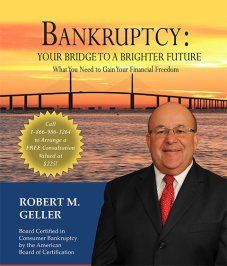
If you need bankruptcy legal help in Pinellas Park, we begin by reviewing your income, debts, assets, and immediate concerns to determine which options may be appropriate for your circumstances. We guide you through each stage of the bankruptcy process, prepare your filing documents, identify available exemptions, and attend the meeting of creditors with you. Robert M. Geller is a Certified Specialist in Consumer Bankruptcy Law through the American Board of Certification, a designation requiring peer recommendations, ongoing legal education, and a comprehensive examination.
Contact Our Office
Pinellas Park and Pinellas County residents looking to understand how bankruptcy law applies to their situation can call 813.536.4468 or schedule a free consultation online with the Law Offices of Robert M. Geller, P.A.
Frequently Asked Questions
Yes. A person in Pinellas Park may generally file for bankruptcy without a spouse. However, the nonfiling spouse’s income, jointly owned property, and shared debts may still affect the case. Whether filing alone is appropriate depends on the couple’s finances, property, debts, and filing goals.
Before filing for bankruptcy in Pinellas Park, individuals typically need recent pay records, tax returns, bank statements, a complete list of creditors and debts, and documentation for assets such as a home or vehicle. Additional records may be required depending on the person’s financial circumstances.
Filing for bankruptcy in Pinellas Park can affect your access to new credit. Approval afterward depends on the lender, your income, existing obligations, and post-bankruptcy credit activity, so no single approval timeline or result applies to every filer.
Personal bankruptcy may address small-business debts for which you are personally liable, including certain sole-proprietor obligations and personal guarantees. Debts owed only by a corporation or LLC are generally treated separately, so the business structure, account ownership, and loan documents should be reviewed carefully.



















![Signs That You May Need to File Bankruptcy [Infographic]](https://www.attorneyfortampabay.com/wp-content/uploads/2021/01/signs-chap7-v-chap13.jpg)
![How To File for Bankruptcy [Infographic]](https://www.attorneyfortampabay.com/wp-content/uploads/2020/07/bankruptcy-steps-infographic-web.jpg)